Contracts are communication – but to who?
Mark Sherwood-Edwards asks why lawyers don’t think of contracts as ‘an act of communication’ and concludes by saying ‘It’s a mystery’.
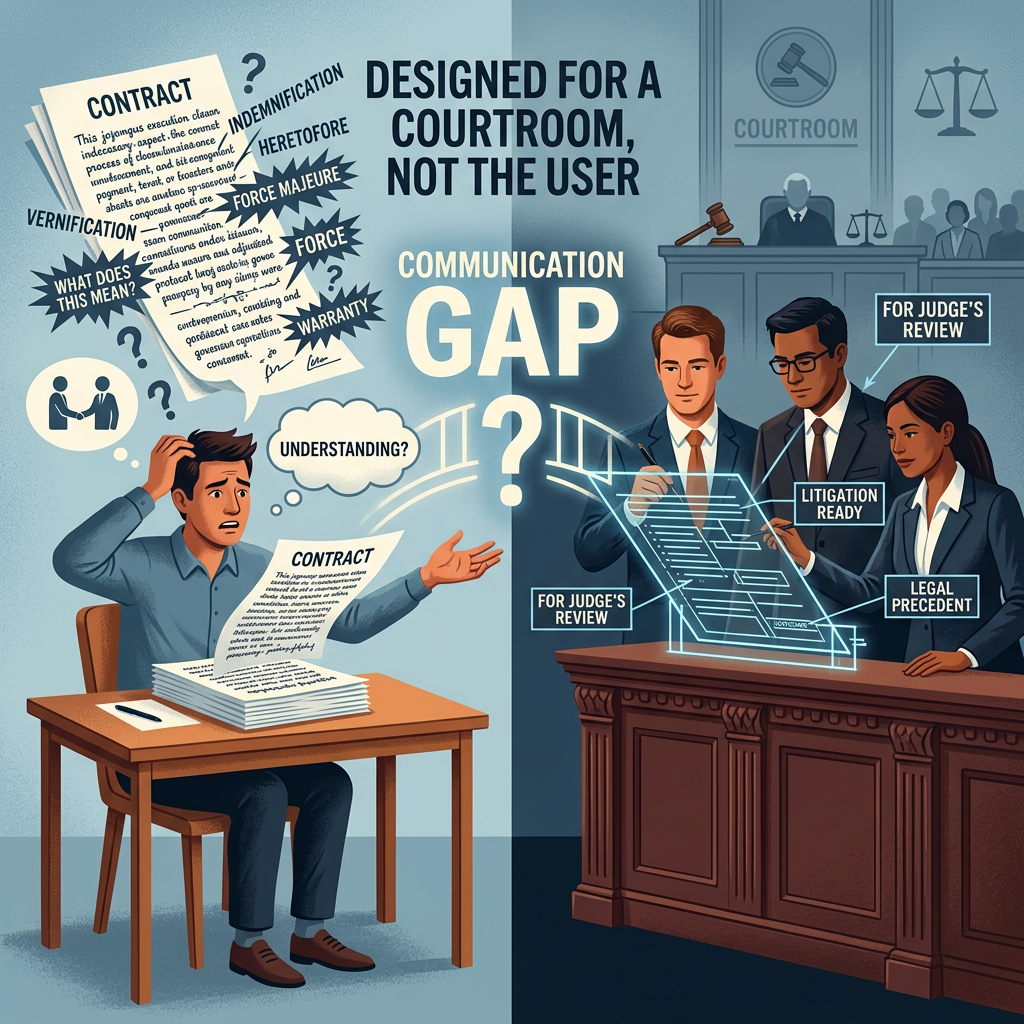
Well, this question is far from new and I think the answer is clear. Lawyers do appreciate (even if subconsciously) that contracts are communication tools. But their training tells them that they are communicating with other lawyers and, ultimately, a possible courtroom. So that’s the audience they design for.
Does this make sense? From a business perspective, probably not. It results in contracts that are rarely used to guide performance and causes many non-lawyers to work around the entire contracting process rather than embrace it. That creates risk, it ensures losses during performance and increases the frequency of disagreements. Unfortunately, this is mostly invisible to the lawyer who wrote the agreement because they left the scene once the contract was signed.
As Mark rightly says, “ with contracts, unlike other forms of business communication, there’s rarely any thought given to the ancillary messaging – the wording, formatting, styling, graphics, layout etc – or that feature when we are trying to get someone to think well of us or be persuaded by our point of view. “
Fortunately, that’s not universally true and better contract design is very much a thing. It’s been gaining pace over the last 20 years and is increasingly embraced by major corporates such as Shell, RioTinto, Schneider Electric, Vodafone and others, plus a few public sector agencies. But the fact that there’s been some progress should not be hailed as a breakthrough – effective communication should be the norm.
We just have to overcome the point that many lawyers love mystery – it’s part of their professional identity. As one of the law students I taught in my time as a professor told me: “I always thought that if I didn’t use legal language, people would think I was stupid”.